


You may notice weak airflow from your vents, rooms that heat unevenly, or a furnace that runs longer than normal. In many cases, these problems are caused by high static pressure in furnace systems, which is a condition where airflow becomes restricted inside the ductwork, forcing the furnace blower to work harder to push air through the system.
When furnace high static pressure develops, heating efficiency drops, airflow weakens, and the system can experience unnecessary strain.
Understanding why the furnace static pressure is too high is the first step to restoring proper airflow and protecting your HVAC equipment.
In this guide, you’ll learn the real causes of high static pressure in furnaces, how professionals diagnose it, and the practical solutions that restore airflow and comfort in Mississauga homes.
If your system is already showing warning signs, you may need reliable furnace repair in Mississauga as soon as possible.
What Is Static Pressure in an HVAC Furnace System?
Static pressure in an HVAC system refers to the resistance air encounters as it moves through the furnace and ductwork. In simple terms, it is the force that pushes back against the airflow your heating system is trying to deliver throughout the home.
Look at the diagram below to understand the process visually.
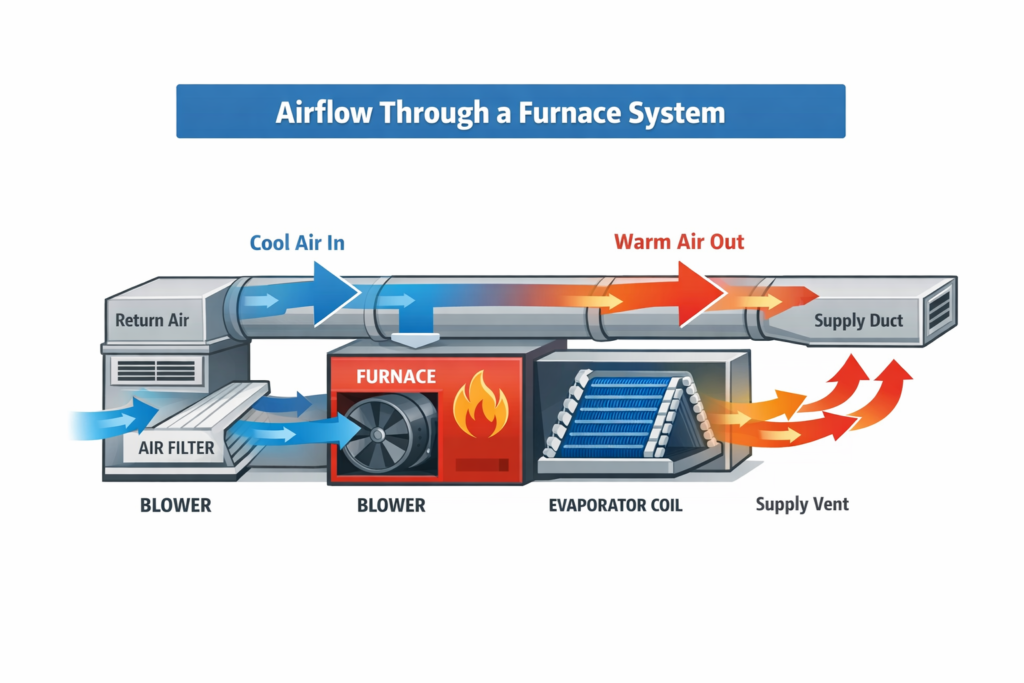
Look carefully, inside a furnace system, the blower motor is responsible for pushing heated air through the duct network. As the blower moves air forward, every component in the air path, including the filter, return ducts, supply ducts, and coils.
Together, these create a certain amount of furnace airflow resistance.
A small amount of resistance is completely normal. Every HVAC system is designed to operate with some level of pressure as air travels through filters, bends in the ductwork, and supply registers.
However, when restrictions increase beyond what the furnace was designed to handle, airflow begins to suffer. The blower must work harder to push air through the system, which can reduce airflow at the vents and place unnecessary strain on the furnace components.
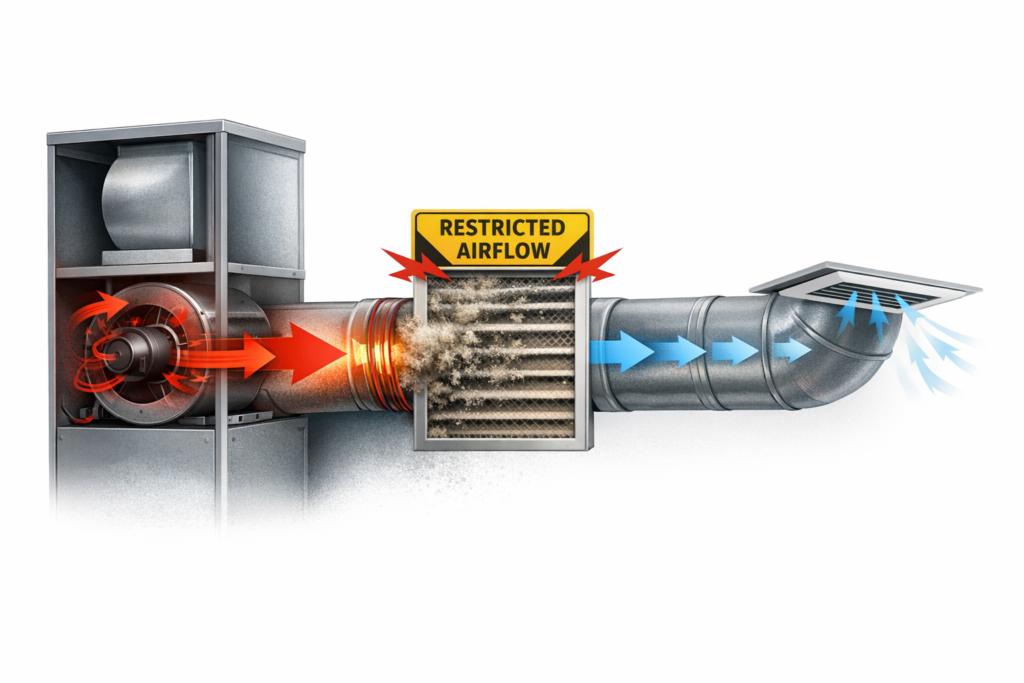
Airflow design also plays a role in how well a furnace handles this resistance. For example, modern systems like the Lennox Merit furnace are engineered to move air efficiently when duct design and filtration are properly matched to the equipment.
Oh, this was too technical, right? Let’s now make things simpler to understand. However, it was just a process; you don’t have to pay much attention here.
Is High Static Pressure in Furnace Systems Good or Bad?
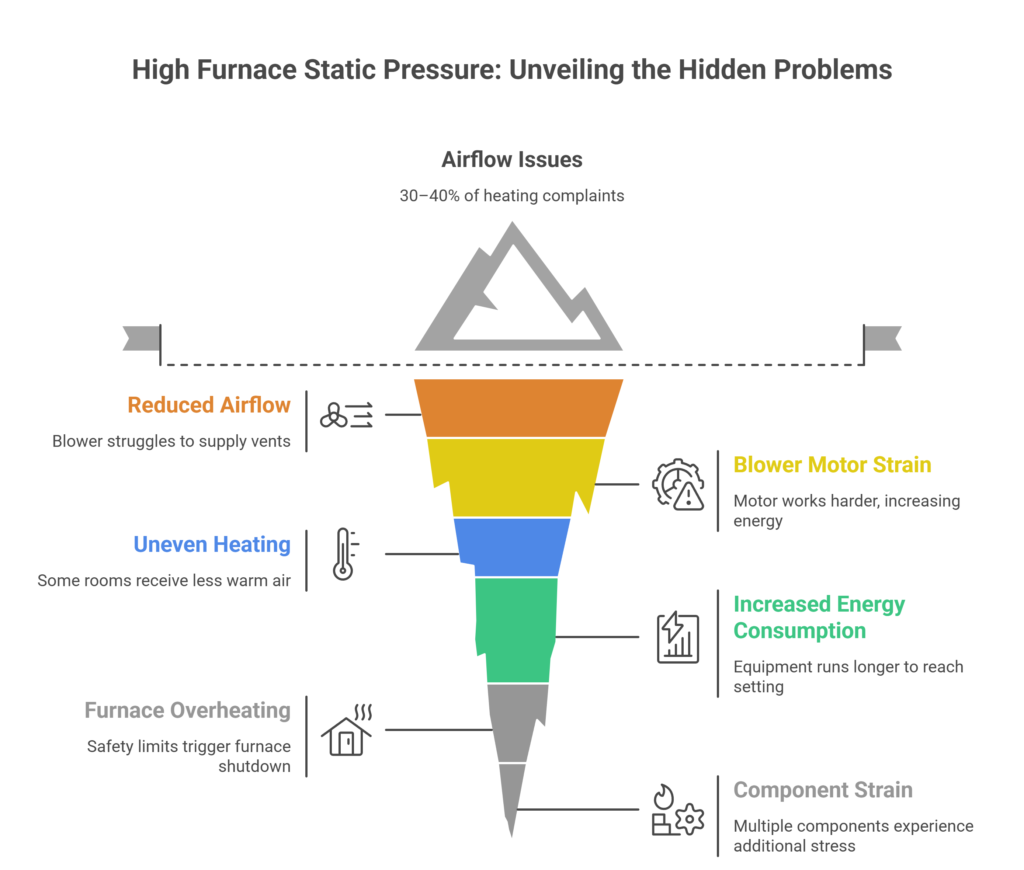
Recent HVAC service reports across the Greater Toronto Area suggest that airflow-related issues account for nearly 30–40% of residential heating complaints, with duct restrictions and high static pressure in furnace systems being a major contributor in older homes and renovated properties.
Are you now feeling worried because this could be happening in your home?
Well, this concern is justified. When high furnace static pressure develops inside a heating system, it usually means the blower is fighting excessive airflow resistance somewhere in the ductwork or filtration system.
However, as we mentioned earlier, not all static pressure is harmful. Some resistance is normal in any forced-air system. The problem begins when the furnace static pressure too high exceeds the airflow limits the equipment was designed to handle.
Below are some reasons why excessive static pressure can negatively affect furnace performance.
- Reduced Airflow Throughout the Home
When high static pressure in furnace systems builds inside the duct network, the blower struggles to push enough air to supply vents. This results in weak airflow, uneven heating between rooms, and reduced comfort across the home. - Blower Motor Working Harder Than Designed
With high furnace static pressure, the blower motor must push air against greater resistance. Over time, this added workload can increase energy consumption and shorten the lifespan of the blower components responsible for circulating heated air. - Uneven Heating and Comfort Problems
When the furnace static pressure is too high, it limits airflow, and some rooms receive less warm air than others. This commonly leads to temperature imbalance, where certain areas remain colder even though the furnace continues running. - Increased Energy Consumption
Restricted airflow caused by high static pressure forces the heating equipment to run longer to reach the thermostat setting. This extended operation often results in higher energy usage and increased heating costs. - Risk of Furnace Overheating
If high furnace static pressure significantly restricts airflow across the heat exchanger, the furnace can operate at higher internal temperatures. In many systems, this may trigger safety limits, causing the furnace to shut off temporarily to prevent damage. - Unnecessary Strain on Furnace Components
When this pressure persists for long periods, multiple components experience additional strain. The blower motor, heat exchanger, and airflow controls may all operate under less-than-ideal conditions, increasing the risk of premature wear.
Ignoring airflow restrictions can gradually reduce heating efficiency and place stress on your HVAC system. Understanding why high pressure in the furnace is harmful helps homeowners recognize early warning signs before serious damage occurs.
Now that we understand why excessive pressure is a problem, the next step is identifying how to tell if your furnace actually has high static pressure and what symptoms appear first in a home heating system.
5 Signs Your Furnace Has High Static Pressure (Airflow Symptoms)
Furnace airflow issues rarely appear all at once. In many homes, furnace airflow problems start with small comfort changes that gradually become more noticeable. When airflow resistance builds inside the duct system, it often leads to several high static pressure furnace symptoms that homeowners experience before they understand why furnace airflow is low.
Below are some common airflow symptoms that can indicate excessive pressure inside the heating system.
Weak Airflow From Supply Vents
Stand near a few supply vents in different rooms and feel the strength of the air coming out. If the airflow feels noticeably weak even while the furnace is running, it may signal restricted airflow inside the system.
Weak air movement is one of the most common furnace airflow problems, and many homeowners first notice it when the furnace seems to be operating but air delivery remains poor. In some cases, this can resemble situations where a furnace not blowing properly.
Noisy Ducts or Whistling Vents
Listen carefully to the ductwork and supply vents while the furnace is operating. High airflow resistance can cause air to move through smaller openings or restrictions, producing whistling, rushing, or vibrating sounds in the duct system.
These noises are often early high static pressure furnace symptoms and usually appear when airflow is being forced through tight or restricted pathways.
Uneven Heating Between Rooms
Walk through different rooms in the house and compare temperatures while the furnace is running. If some rooms feel warm while others remain noticeably cooler, the system may be struggling to distribute air evenly.
Uneven heating is another indicator of furnace airflow problems, often occurring when airflow resistance prevents warm air from reaching distant rooms effectively.
Higher Than Normal Energy Bills
Check recent energy bills and compare them with previous heating seasons. If heating costs have increased even though usage habits have not changed, airflow restriction may be forcing the furnace to run longer to reach the thermostat setting.
When the furnace airflow is low, the furnace must operate longer cycles to compensate for reduced air delivery.
Furnace Short Cycling
Pay attention to how frequently the furnace turns on and off. If the system runs briefly, shuts down, and then restarts again within a short time, this may indicate overheating protection being triggered.
Short cycling can sometimes occur when high static pressure furnace symptoms restrict airflow across the heat exchanger, causing internal temperatures to rise faster than expected.
If you’re noticing one or more of these signs in your home, there’s a good chance airflow inside the furnace system isn’t moving the way it should. Many homeowners in Mississauga start seeing these symptoms long before they realize the real issue is pressure building inside the duct system.
So let’s look at what actually causes high static pressure in furnace systems and where these airflow restrictions typically develop.
What Causes High Static Pressure in Furnace Systems: Diagnosis and Fixes
To understand what causes high static pressure HVAC systems, you need to follow the path that air takes through the furnace. Air must move freely from the return ducts, through the filter and blower, across the evaporator coil, and finally through the supply duct system.
Whenever something along this path restricts airflow, furnace airflow restriction begins to build. As resistance increases, pressure rises inside the duct system and the furnace must work harder to circulate air. These airflow blockages are among the most common high static pressure furnace causes found during HVAC inspections.
Many of these restrictions develop gradually due to neglected maintenance or airflow design issues. Situations like this often begin with overlooked system care, which is why technicians frequently point to common furnace maintenance mistakes when diagnosing airflow problems.
The best way to identify the restriction is to inspect the airflow path step by step.
Dirty Furnace Filter or Restrictive Air Filtration
Start by checking the furnace filter. Every bit of air entering the furnace must pass through this filter before reaching the blower.
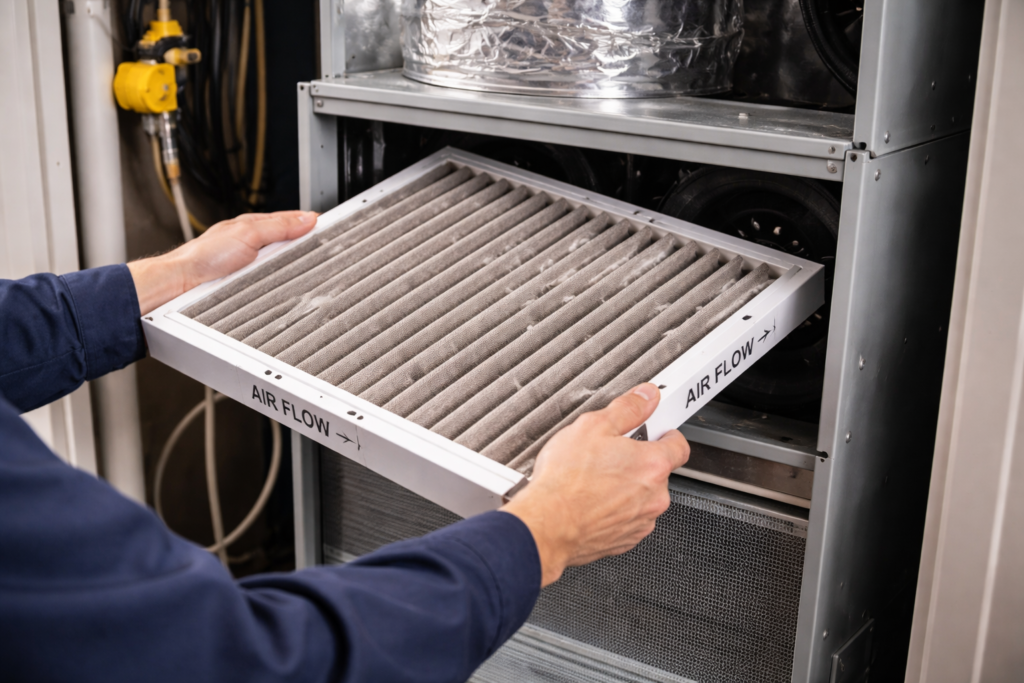
When dust accumulates in the filter material, it increases the dirty furnace filter airflow restriction and reduces the amount of air that can pass through the filter surface. In HVAC diagnostics, this resistance is called the pressure drop of the air filter that HVAC systems must overcome.
If the filter is clogged, the blower must work harder to pull air through the filter media. Over time, this restriction increases pressure inside the furnace cabinet.
Remove the filter and inspect it under light. If the filter appears dark, packed with dust, or bent, it should be replaced. This guide explains when to replace furnace filter to maintain proper airflow.
Some homes also install high-MERV filters in narrow filter slots. While these filters improve air quality, they can create excessive airflow resistance if the filter cabinet is too small.
Replacing the filter regularly or upgrading the filter cabinet usually restores proper airflow. If you’re unsure how to do it properly, learn how to replace furnace filter to avoid airflow restriction.
Undersized Return Ducts or Poor Return Air Design
Next, inspect the return air pathway. The blower cannot circulate air through the home unless enough air can return to the furnace.
Look at the image below to understand things more clearly.
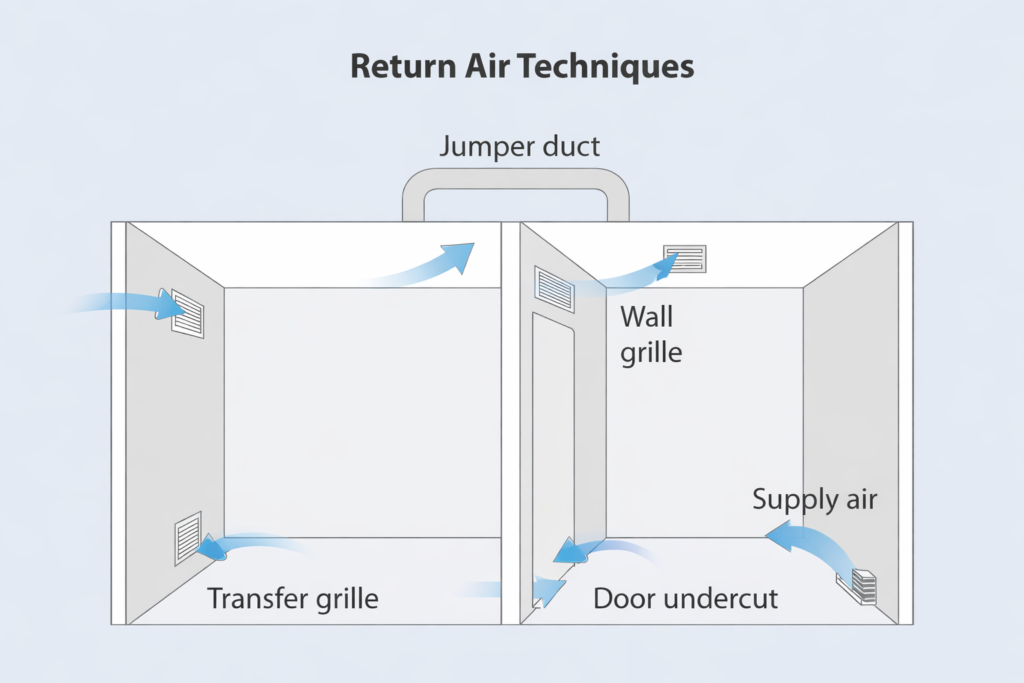
When the return duct system is too small, the furnace experiences an undersized return duct furnace design, which limits how much air can flow back to the blower. This creates a return airflow restriction that HVAC systems must overcome before air even reaches the heating components.
Check all return grilles throughout the home. Make sure furniture, rugs, or storage items are not blocking these openings. Air must freely enter the return ducts for the furnace to operate properly.
Some older homes in Mississauga were built with fewer return vents than modern airflow standards recommend. In these cases, improving airflow may require adding additional return grilles or enlarging existing ductwork to allow more air to reach the furnace.
Closed Supply Vents or Blocked Ductwork
After inspecting the return system, check the supply vents that deliver heated air throughout the house.
Homeowners sometimes close vents in unused rooms to redirect airflow. However, closing multiple vents increases closed vents static pressure within the duct system. This restriction forces the blower to push air through fewer openings, creating supply duct airflow restriction.
Walk through the home and confirm that supply vents are fully open and not covered by furniture, rugs, or curtains. Air must be able to move freely through these vents for the furnace to distribute heat properly.
Home construction features can also affect airflow balance. For example, poor window sealing can increase heating demand in certain rooms. Issues like this are discussed in how drafty windows affect furnace efficiency and can influence how air circulates throughout the home.
Dirty Evaporator Coil Restricting Airflow
Finally, inspect the evaporator coil located above the furnace cabinet. Although this component is primarily used during air conditioning, it sits directly in the furnace airflow path.
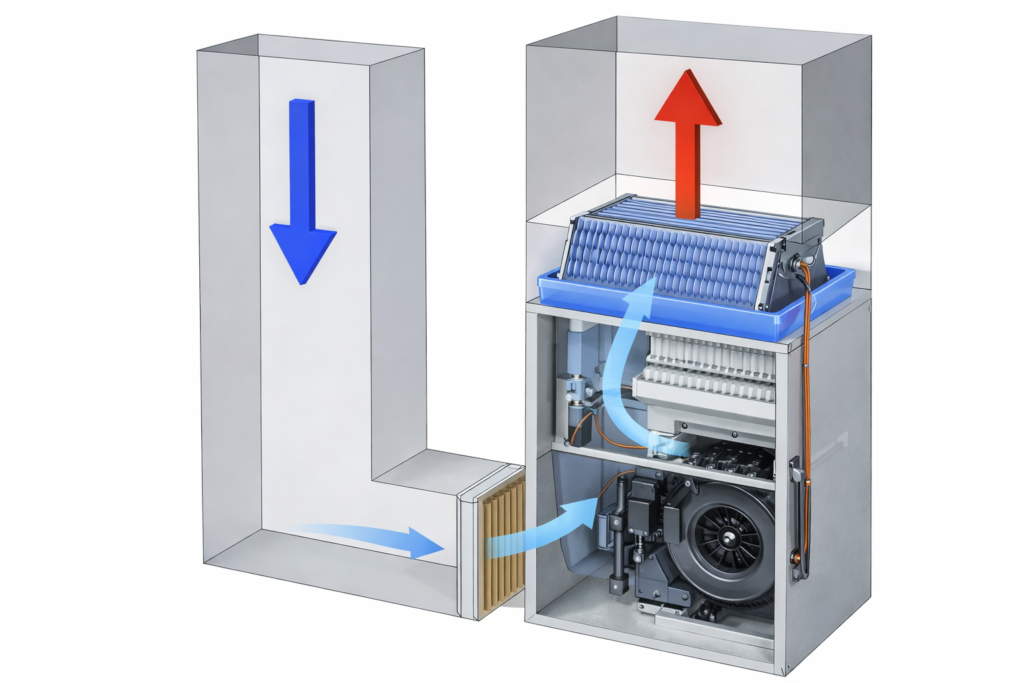
Over time, dust and debris can accumulate between the coil fins. This buildup narrows the airflow channels and creates evaporator coil airflow restriction, increasing the coil pressure drop HVAC systems must overcome.
Because the coil is enclosed inside the furnace cabinet, the buildup is not always visible from outside. When this happens, airflow must push through smaller passages between the coil fins, increasing resistance inside the system.
Cleaning the evaporator coil typically requires professional service. Routine inspections, such as those included in furnace maintenance, help prevent this type of airflow restriction from developing.
If the airflow path appears clear but pressure problems still occur, deeper airflow measurements may be required. At that stage, HVAC technicians use diagnostic tools to measure static pressure levels and determine where resistance is occurring inside the system.
So what do you think after walking through these steps? Will you be able to identify all the causes of furnace airflow restriction in your system and address them yourself? Or would you prefer experienced technicians to inspect the system and resolve the issue properly?
If you’re unsure or want to avoid trial-and-error troubleshooting, our team can help diagnose the real high static pressure furnace causes and restore proper airflow safely and efficiently.
How Our HVAC Technicians Measure Static Pressure in Furnace Systems in Mississauga
Once the common airflow restrictions are checked, the next step is to measure furnace static pressure accurately, which requires professional diagnostic tools.
At HVAC Group, our technicians perform a precise HVAC manometer test to understand how air is moving through your furnace system and where resistance is building inside the ductwork.
This process helps identify whether airflow restrictions are coming from the return side, the supply side, or inside the furnace cabinet itself.
During the inspection, we measure pressure at two key locations: the return air side and the supply air side. By comparing these readings, technicians perform what is known as a TESP furnace test (Total External Static Pressure). This measurement shows how much resistance the blower is facing while trying to move air through the system.
To perform this test, small diagnostic ports are carefully drilled in the duct system near the furnace. A digital manometer is then connected to measure pressure differences between the return and supply sides.
These readings allow our technicians to diagnose hidden airflow restrictions that cannot be seen during a basic visual inspection.
Testing static pressure properly is part of professional HVAC maintenance in Mississauga and helps determine whether a system needs airflow adjustments, duct improvements, or, in some cases furnace repair or furnace installation if airflow design problems are severe.
Final Thoughts
It is definitely not easy to diagnose airflow issues inside a furnace system. Many homeowners try to understand the problem on their own, but the truth is that airflow diagnostics often require specialized tools and years of experience.
We completely understand how frustrating it can be when a heating system does not perform the way it should. Many of our previous clients in Mississauga have expressed the same concerns before we helped them identify the real cause behind their furnace airflow problems.
However, we want you to think of this guide as a starting point. If you find this guide helpful and believe your furnace might be dealing with airflow restrictions, our team at HVAC Group is always here to help diagnose the issue and restore proper heating performance in your home.
