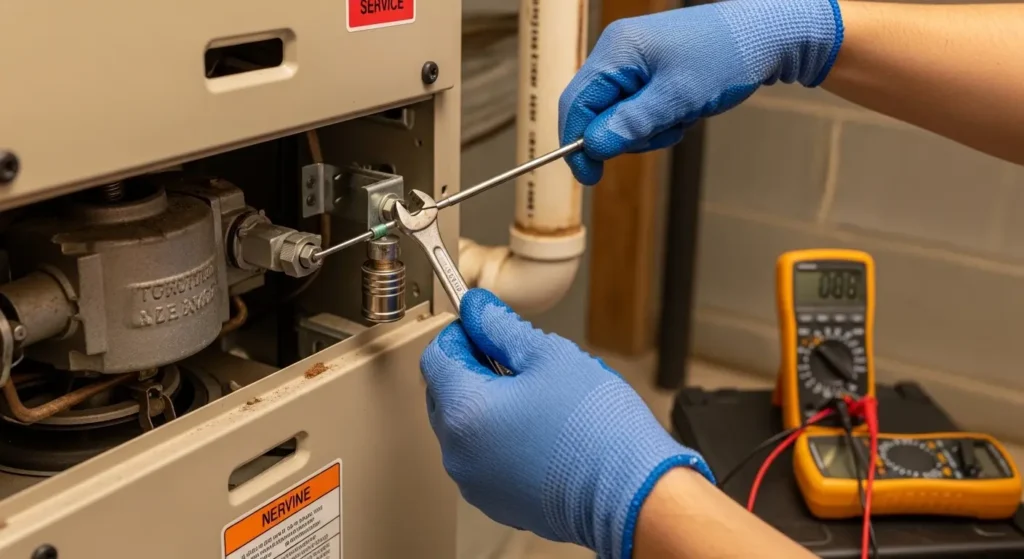


Asking yourself why does my furnace keep turning on and off repeatedly in Mississauga?
In most homes, this is furnace short cycling, where the heater starts, stops, then restarts in a loop. It can happen during cold snaps when the heating load is high, or after a simple change like a new filter.
Short cycling wastes gas, drives up bills, and wears parts like the blower motor, flame sensor, and control board. It can also signal airflow restriction, thermostat short cycling, or a safety shutdown tied to overheating.
In this guide, you will learn the common furnace short cycling causes, the safe checks you can do at home, and the clear signs it is time to call a licensed technician in Mississauga. You will also see repair cost ranges and how to prevent this problem next winter.
What Is Furnace Short Cycling and Why Does It Happen?
Before we answer you, why does my furnace keep turning on and off repeatedly? Let’s get into the basics.
If your furnace keeps starting and stopping during a cold Mississauga evening, it gets frustrating fast. The house never feels fully warm. The system sounds like it is working hard, yet comfort does not improve.
Many homeowners describe it as the heater cycling on and off every few minutes. That pattern is not normal. During heavy winter demand, your furnace should run steadily, complete a full heating cycle, and then shut off once the set temperature is reached.
When it keeps restarting before that happens, something inside the system is interrupting the operation.
Furnace short cycling is when the unit turns on, runs briefly, shuts off too soon, and then starts again shortly after. Instead of running 10 to 15 minutes to heat the home properly, it may run only 2 to 5 minutes. Then it repeats the process.
A normal heating cycle looks like this:
- The thermostat calls for heat
- Burners ignite
- The blower circulates warm air
- Home reaches set temperature
- Furnace shuts down smoothly
When the furnace cycles every 7 minutes or less, that is usually short cycling. Frequent starts strain ignition components, stress the blower motor, and reduce overall efficiency. More starts mean more fuel use and more wear on electrical parts.
In many service calls, this issue connects back to basic HVAC common mistakes that quietly affect airflow or thermostat settings.
Now let’s talk about why it happens.
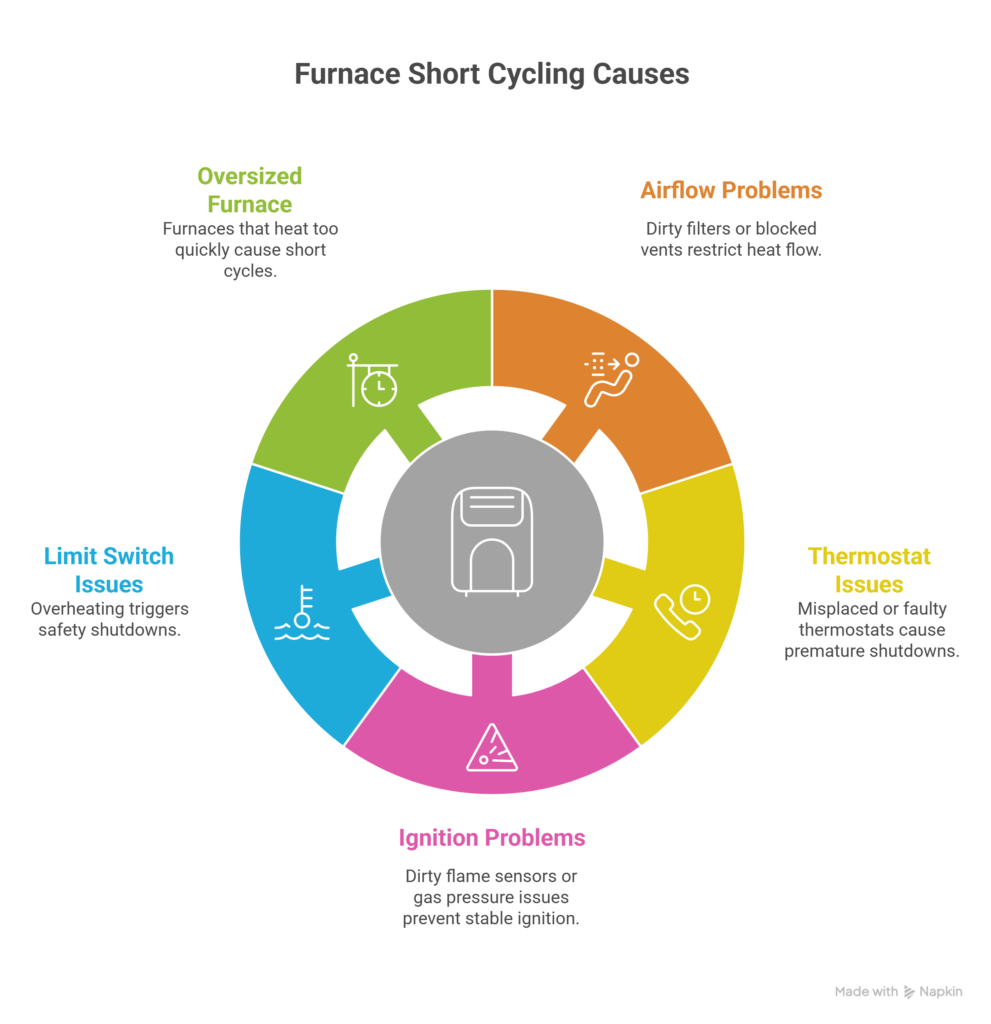
There is always a reason behind furnace cycling on and off. The system is designed with safety controls that shut it down when something is not right. Below are the most common causes in Mississauga homes.
Airflow Restriction
When airflow is blocked by a clogged filter or closed vents, heat builds inside the furnace. The high limit switch detects overheating and shuts the system off. After cooling down, it restarts. This loop continues, which explains why the heater keeps cycling on and off.
Thermostat Problems
If the thermostat is poorly placed or miscalibrated, it may signal the furnace to stop too early. That can make it seem like the furnace turns off before reaching temperature.
Flame Sensor or Ignition Issues
If the furnace ignites but cannot confirm flame stability, it shuts down as a safety measure. Then it tries again.
Oversized Furnace
In some homes, the furnace heats the space too quickly. It satisfies the thermostat before air circulates fully, causing repeated short cycles.
Short cycling is not random behaviour. It is a warning that something in the heating cycle is off balance.
When your furnace keeps short-cycling during a Mississauga winter, it deserves attention. Frequent restarts reduce efficiency, increase gas bills, and accelerate part failure. Addressing the root cause early protects both comfort and equipment lifespan.
Is Furnace Short Cycling Dangerous for Mississauga Homes?
When a furnace keeps turning on and off, most homeowners worry about comfort and cost first. That makes sense. But in Mississauga, where furnaces run hard for long winter stretches, the bigger question is safety.
Knowing why does my furnace keep turning on and off repeatedly is fine, but before we need to be careful how dangerous it could be if not fixed.
A lot of short cycling is caused by simple issues like airflow restriction or thermostat problems. Still, some cases are a safety shutdown, and that is where you do not want to guess. If your furnace turns off before reaching temperature again and again, the system may be protecting itself or your home.
Gas appliance safety matters here because the furnace is burning fuel inside your house. When something in combustion or venting is not right, the safest move is to treat it seriously.
Let’s get clear on when short cycling is dangerous and when it is usually not.
When Furnace Short Cycling Is Usually Not Dangerous
Short cycling is often not an emergency when the furnace:
- Runs, blows warm air, and shuts off without unusual smells
- Does not trigger a carbon monoxide alarm
- Has no visible soot, scorch marks, or water pooling
- Starts and stops, but still heats the home slowly
In these cases, common causes include a clogged filter, blocked vents, or a thermostat short-cycling. These still need fixing, because frequent starts waste gas and wear parts, but it is less likely to be an immediate hazard.
When Furnace Short Cycling Can Be a Safety Issue
Short cycling can become dangerous when it is tied to combustion problems, venting issues, or internal damage. Here are the warning signs that mean you should stop and take action.
- Carbon monoxide risk signs
Carbon monoxide is odourless. You cannot rely on smell. Watch for signs like headaches, nausea, or a carbon monoxide alarm going off. If there is any alarm event, treat it as urgent. Leave the area, get fresh air, and call for help. - Safety shutdown patterns
A safety shutdown often looks like this: the furnace starts, runs briefly, then shuts down quickly and repeats. This can happen when a flame sensor cannot detect flame, when a pressure switch detects venting trouble, or when the high limit switch trips from overheating. If the furnace shuts down within a minute or two repeatedly, do not keep resetting it. - Signs of a cracked heat exchanger
A cracked heat exchanger is serious. It can change how combustion gases move through the system. Possible clues include rattling, popping sounds, odd flame behaviour, or soot around the burner area. This is one of the reasons annual inspection is so important. - Venting or combustion smell issues
If you smell exhaust-like odours, notice scorch marks, or see soot, stop using the furnace. That is not a “wait and see” situation.
What You Should Do Right Away
If any safety warning signs show up, here is the safest response:
- Turn the thermostat off
- Shut down the furnace at the switch if safe to access
- Open a window for ventilation
- Do not run the furnace again until it is inspected
- If you suspect carbon monoxide, leave the home and call emergency services
If the furnace is short-cycling without those warning signs, you can do basic safe steps first, like checking the filter and making sure vents and returns are open. But if the furnace still keeps shutting off before reaching temperature, it is time for a professional diagnosis.
What an Enbridge Red Tag Can Mean in Mississauga?
In Ontario, a technician or gas utility may place a red tag on equipment that is unsafe or does not meet code requirements.
This can happen due to venting issues, combustion problems, or other hazards. Red tags are not all the same, but they always mean the system needs attention before normal use continues. If you ever run into a tag situation, Enbridge red tags are worth understanding so you know what the next steps usually look like.
Short cycling is not just a comfort issue. It can be a clue that the furnace is failing to vent properly or is not burning fuel correctly. Combustion testing checks how cleanly the furnace is operating. Venting checks confirm exhaust is leaving the home safely.
These tests cannot be done properly by eyeballing the unit. They require tools and training, and they are a key part of protecting gas appliance safety in Mississauga homes.
Short cycling does not always mean danger, but it can. The safest approach is to look at the pattern and the warning signs. If anything points to a safety shutdown, carbon monoxide risk, or a cracked heat exchanger, stop running the furnace and get it checked.
Catching a real safety issue early is always better than finding out during the coldest week of the year. However, now it’s time to learn why my furnace keep turning on and off repeatedly.
Why Does My Furnace Keep Turning On and Off Repeatedly: Most Common Causes in Mississauga Homes
When your furnace keeps turning on and off repeatedly, the system is reacting to something. It is not random. In Mississauga winters, furnaces operate under heavy demand. Long run times expose weaknesses in airflow, thermostat control, ignition stability, and safety protection systems.
Furnace short cycling happens when the heating cycle is interrupted before the home reaches the set temperature. The unit ignites, runs briefly, shuts off, cools down, and then starts again.
That repeated start and stop pattern increases wear on burners, blower motors, and control boards. It also raises gas consumption because ignition is one of the most energy-intensive parts of the operation.
The key to solving it is a structured diagnosis. Start with the most common cause and move deeper only if needed.
Airflow Problems: Dirty Filter, Blocked Vents, Static Pressure Issues
Airflow restriction is the number one reason a heater is short-cycling in Mississauga homes.
Here is what happens mechanically. When airflow drops, heat cannot move across the heat exchanger properly. Internal temperature rises quickly. The overheating limit switch senses unsafe temperature and shuts the burners off. The blower continues running to cool the system.
Once the temperature drops, ignition starts again.
That creates the repeated cycle.
Common airflow triggers include:
- Missed filter replacement
- Filter too restrictive for the duct system
- Closed supply vents
- Blocked return air pathways
- A dirty blower wheel is reducing air movement
- High static pressure inside ductwork
Even furnace short cycling with a new filter can happen if the filter has a high MERV rating that restricts airflow beyond what the system was designed for.
Short Fix Steps for Airflow Issues
Step one: Remove the filter and inspect it against light. If clogged, install the correct size and rating. If unsure, review when to replace the furnace filter based on usage.
Step two: Confirm all supply vents are fully open and not blocked by furniture or rugs.
Step three: Check return air grilles for blockage from boxes or stored items.
Step four: Listen for whistling or strong air pressure sounds, which may signal high static pressure.
Step five: If airflow still feels weak at multiple vents, stop troubleshooting and schedule an inspection, as blower cleaning or duct evaluation may be needed.
Airflow correction solves a large percentage of furnace short-cycling cases.
Thermostat Issues: Misplacement, Calibration, Short Cycling Settings
If airflow is normal but the furnace keeps short-cycling, the thermostat becomes the next logical suspect.
Thermostat short cycling happens when the control stops the furnace too early. A poorly placed thermostat near a window, supply vent, or drafty wall can detect warm air too quickly. It signals the furnace to shut down even though the rest of the home is still cold.
Other triggers include:
- Dead batteries
- Loose thermostat wiring
- Incorrect cycle rate setting
- Smart thermostat adaptive learning behaviour
- Temperature swing settings are too tight
This often explains why a furnace cycles every 7 minutes or why it turns off before reaching temperature in colder rooms.
Short Fix Steps for Thermostat Issues
Step one: Replace thermostat batteries even if the screen looks normal.
Step two: Lower the temperature setting by one degree and observe if the cycle length improves.
Step three: Confirm thermostat is level and securely mounted.
Step four: Check that it is not exposed to direct sunlight or supply air.
Step five: Review basic setup and cycle rate settings using reliable programmable thermostat tips to confirm proper configuration.
If cycling continues after simple corrections, professional calibration may be required.
Flame Sensor, Ignition or Gas Pressure Problems
If the furnace ignites and shuts off within seconds, airflow is not the issue. This pattern points to the ignition sequence.
During startup, the gas valve opens, and burners ignite. The flame sensor must detect a stable flame. If it does not, the gas valve closes immediately for safety. The furnace then attempts to restart.
That repeated ignition attempt makes it seem like the furnace keeps starting and stopping.
Common causes include:
- Dirty flame sensor
- Weak flame due to gas pressure imbalance
- Corroded burner assembly
- Ignition timing fault
- Control board interruption
This is one of the more technical furnace short-cycling causes.
Short Fix Steps for Ignition Issues
Step one: Observe if burners light and shut off within five seconds. If yes, avoid repeated resets.
Step two: Turn off the power to the furnace at the switch.
Step three: Do not attempt to adjust gas components without proper tools.
Step four: If comfortable and experienced, flame sensor cleaning may resolve minor buildup, but improper handling can cause damage.
Step five: If ignition failure repeats, stop cycling the unit and schedule an inspection for the flame sensor problem and combustion testing.
Gas appliance safety should never be handled casually.
Limit Switch or Overheating Safety Shutdown
The high-limit switch protects the furnace from internal damage. When the temperature exceeds safe limits, it trips and forces a shutdown.
Repeated overheating cycles can indicate:
- Failing blower motor
- Blocked secondary heat exchanger
- Severe airflow imbalance
- Internal heat exchanger damage
If the furnace turns off before reaching temperature and strong heat bursts are followed by sudden shutdown, overheating protection is likely active.
Short Fix Steps for Limit Switch Issues
Step one: Confirm filter and vent airflow are clear first.
Step two: Listen for unusual blower noise that may signal motor strain.
Step three: If you notice burning smells or metal popping sounds, turn off the furnace.
Step four: Do not repeatedly reset the system.
Step five: Follow a structured furnace service checklist with a licensed technician to inspect safety components.
Overheating should always be treated seriously.
Oversized Furnace or Installation Setup Issues
An oversized furnace can also cause furnace cycling on and off.
If the unit heats the home too quickly, the thermostat turns off before the air fully circulates. The furnace shuts down early, then restarts as temperatures drop again. This creates comfort swings and short-run cycles.
This issue is more common in newer installations or after renovations that change home insulation levels.
Short Fix Steps for Oversizing Issues
Step one: Observe if the heat blasts strongly for short bursts and shuts off quickly.
Step two: Check if the temperature varies significantly between rooms.
Step three: Avoid adjusting the thermostat frequently, which worsens cycling.
Step four: If the system was recently installed, request a load calculation review.
Step five: If short cycling persists despite airflow and thermostat corrections, system sizing evaluation may be necessary.
Oversizing is often misdiagnosed as a faulty part when it is really a design issue.
When a furnace keeps short-cycling in Mississauga, the cause follows a logical path. Start with airflow. Then evaluate thermostat control. Then investigate ignition stability and safety shutdowns. Only after those checks should sizing or internal damage be considered.
Short cycling is a symptom. The furnace is responding to an imbalance. Address the root cause early, and you protect efficiency, safety, and system lifespan during peak winter demand.
Which Furnace Parts Commonly Cause a Furnace to Keep Starting and Stopping?
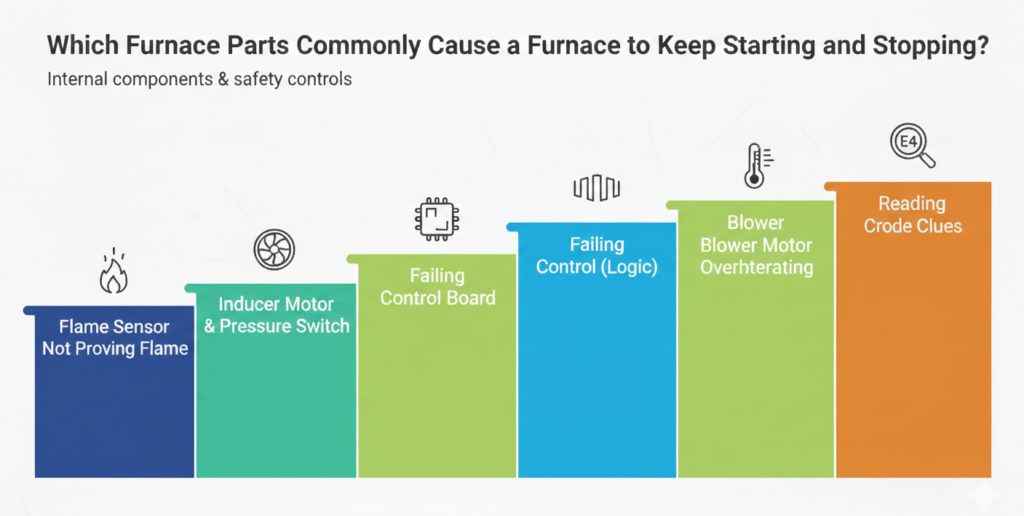
If your furnace keeps starting and stopping even after basic troubleshooting, the issue often lies inside the unit. Modern furnaces are built with layered safety controls. When one component does not behave properly, the system shuts down to prevent damage or unsafe combustion.
Understanding the ignition sequence helps make sense of this.
When the thermostat calls for heat, the inducer motor starts first. It clears exhaust gases. The pressure switch confirms proper airflow through the venting. Then the gas valve opens, burners ignite, and the flame sensor confirms a stable flame. Finally, the blower distributes warm air.
If any part of that sequence fails, the furnace shuts down. Then it attempts to restart. That is what creates repeated short cycling.
Let’s break down the most common internal parts involved.
Flame Sensor Not Proving Flame
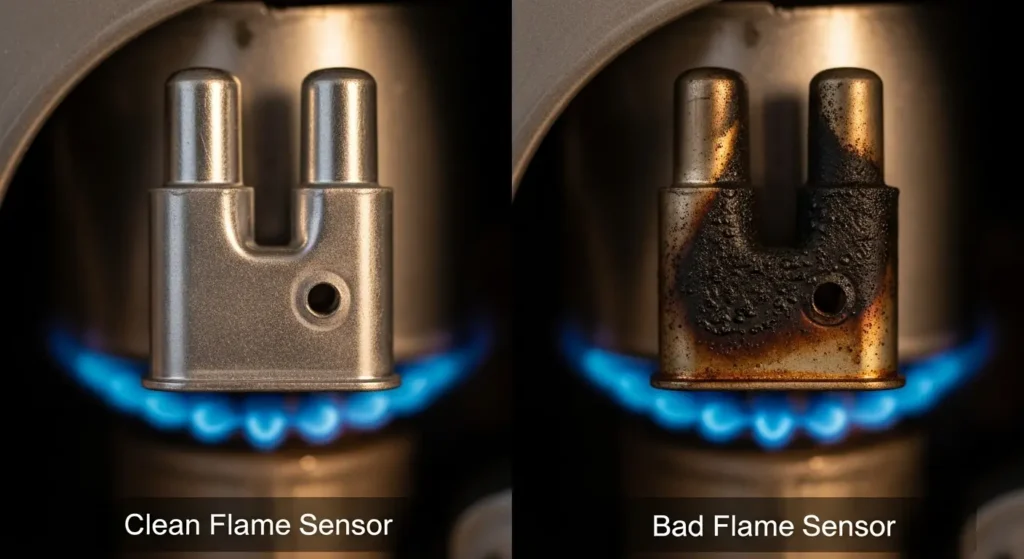
The flame sensor is a small metal rod that confirms burners are actually lit. If it cannot detect flame within a few seconds, the control board shuts off the gas immediately.
This is a very common reason why a furnace keeps short-cycling after ignition.
Typical signs include:
- Burners light, then shut off within 3 to 5 seconds
- The furnace attempts multiple restarts
- No steady heating
A dirty flame sensor is often the cause. Even a thin layer of oxidation can interrupt signal detection. If you suspect this pattern, reviewing a proper flame sensor problem explanation helps understand how it behaves.
Flame issues should not be ignored, especially in gas systems.
Inducer Motor and Pressure Switch Issues
Before ignition, the inducer motor must establish a proper draft through the vent pipe. The pressure switch verifies that exhaust gases can exit safely.
If venting is blocked by ice, debris, or an improper slope, the pressure switch will not close. The furnace will shut down and retry.
This type of furnace short cycling often appears during extreme cold when outdoor vent terminations freeze.
Symptoms may include:
- The furnace attempts to start but never ignites
- Clicking sounds followed by a shutdown
- Error code flashing on the control board
Blocked venting is both a performance and safety issue. Exhaust must exit freely.
Failing Control Board
The control board manages the entire ignition sequence. If it begins failing, signals may be inconsistent. Burners may shut down prematurely. Blower timing may be off.
Control board problems are less common than airflow or flame sensor issues, but when present, they create unpredictable cycling patterns.
If the furnace keeps starting and stopping with no clear airflow or flame issue, deeper electrical diagnostics may be needed.
Blower Motor Overheating
If the blower motor struggles due to internal wear or capacitor failure, airflow drops. Reduced airflow increases internal temperature. The limit switch trips. The furnace shuts off.
This looks similar to a filter restriction, but does not improve after replacing the filter.
Warning signs include:
- Weak airflow at vents
- Loud humming or vibration
- The furnace cabinet feels excessively hot
Blower strain can quietly lead to an overheating shutdown.
Reading Error Code Clues
Most modern furnaces display blinking LED codes. These codes point toward pressure switch faults, limit switch trips, ignition failures, or flame sense errors.
Before resetting repeatedly, observe and record the flash pattern. That code often tells the technician exactly where to focus.
When internal parts interrupt the ignition sequence, short cycling is the system protecting itself. Proper diagnosis prevents unnecessary part replacement and protects gas appliance safety.
How Can You Prevent Furnace Short Cycling in Mississauga Winters?
Preventing furnace short cycling is far easier and less expensive than repairing it in January. In Mississauga, where heating systems run for months without much rest, small airflow or control issues can quickly turn into heater cycling on and off every few minutes.
Imagine again and again asking yourself why does my furnace keep turning on and off repeatedly!!! That’s time-consuming.
That’s why prevention comes down to balance. Proper airflow balance, clean combustion, stable thermostat control, and regular preventative maintenance keep the heating cycle steady and efficient.
If your goal is long-term efficiency and fewer service calls, focus on timing and consistency. Short cycling rarely appears overnight. It builds slowly when maintenance is skipped.
Let’s look at what actually makes a difference.
1) Schedule Fall Servicing Before Heavy Heating Starts
The best time for a seasonal tune-up is early fall, before full winter demand begins. September and October are ideal in Mississauga.
During a proper inspection, technicians check:
- Temperature rise
- Combustion stability
- Blower motor performance
- Limit switch operation
- Venting condition
Catching airflow or ignition problems early prevents furnace short cycling once temperatures drop below freezing.
Annual servicing is not just routine. It protects safety controls and system efficiency. That is why consistent annual furnace maintenance is one of the most effective prevention steps.
2) Follow a Consistent Filter Schedule
Filter maintenance sounds simple, but it is one of the most overlooked causes of furnace short cycling with a new filter.
Set a reminder every 1 to 3 months during heating season. Homes with pets or renovation dust may require more frequent replacement.
Also confirm:
- Correct size
- Proper airflow direction
- Suitable MERV rating for your duct system
An overly restrictive filter increases static pressure and causes an overheating shutdown.
3) Keep Supply and Return Airflow Balanced
Airflow balance is critical for preventing heater cycling on and off.
Make sure:
- Supply vents remain fully open
- Return air grilles are clear
- Furniture does not block airflow
- Basement returns are not covered by storage
Air must move freely through the home and back to the furnace. When returns are blocked, heat builds internally and triggers a safety shutdown.
4) Inspect Venting Before and During Winter
High-efficiency furnaces vent outdoors. Snow buildup, ice formation, or debris can partially block vent pipes.
Before peak winter and after major snowfalls:
- Visually inspect exterior vent terminations
- Clear light snow buildup safely
- Watch for heavy frost accumulation
Blocked venting affects combustion and can cause repeated shutdown cycles.
5) Verify Thermostat Setup and Placement
Thermostat errors contribute to unnecessary short-run cycles.
Confirm:
- Batteries are fresh
- Temperature swing settings are not overly tight
- Smart thermostat adaptive features are properly configured
- The thermostat is not exposed to drafts
A well-calibrated thermostat prevents premature shutdown and stabilises heating cycles.
6) Ask the Right Questions During a Tune-Up
When scheduling preventative maintenance, do not hesitate to ask:
- Is the airflow within the normal static pressure range?
- Is the temperature rise within manufacturer specifications?
- Are safety switches operating correctly?
- Is combustion clean and stable?
These checks directly prevent furnace short cycling from developing quietly.
Furnace short cycling is usually the result of airflow imbalance, control instability, or skipped maintenance. In Mississauga winters, steady operation matters.
Preventative maintenance, consistent filter changes, balanced airflow, and proper thermostat setup keep the heating cycle smooth and protect long-term efficiency.
The goal is simple. Your furnace should run long enough to heat the home comfortably, then shut down calmly. Not start and stop every few minutes.
So, you know the answer to ” Why does my furnace keep turning on and off repeatedly.” But still, you might need some basic checks before asking for help. Let’s learn what those are.
What Quick Checks Can You Do Safely Before Calling for Help?
When the heater keeps cycling on and off, it is tempting to assume the worst. But before scheduling service, there are a few safe homeowner checks you can perform. These are basic troubleshooting steps. They do not involve opening the furnace cabinet or touching gas components.
The goal here is simple. Confirm that the problem is not caused by airflow basics, thermostat settings, or power interruptions. Many furnace short-cycling fix calls in Mississauga are resolved during these first checks.
Let’s walk through them calmly.
1) Confirm Thermostat Settings
Start at the thermostat.
Make sure it is set to Heat and not Auto with aggressive temperature swing settings. Increase the set temperature by two degrees and observe the system.
Watch the full heating cycle:
- Does the furnace ignite?
- Does it shut off within a few minutes?
- Does it blow warm air steadily?
If the furnace turns off before reaching temperature, thermostat control may be part of the issue.
Also check:
- Replace batteries if applicable
- Ensure it is not exposed to drafts or direct sunlight
- Confirm that schedule settings are not rapidly changing temperatures
Small thermostat errors can create repeated short cycles.
2) Check the Breaker and Power Switch
Short cycling sometimes follows brief power interruptions.
Locate the furnace breaker in your electrical panel. Make sure it has not partially tripped. Flip it fully off, then back on once.
Also, confirm the furnace power switch near the unit is in the On position.
If the system recently reset itself due to overheating, a full power cycle can clear temporary lockouts. If the issue returns immediately, a deeper diagnosis is required.
3) Inspect Filter Type and Fit
Even furnace short cycling with a new filter can happen if the filter is too restrictive or poorly fitted.
Remove the filter and inspect:
- Correct size
- Proper airflow direction arrow
- No bending or collapse
- Appropriate MERV rating for your system
A high resistance filter increases static pressure and restricts airflow. If unsure about timing or type, review a proper furnace service checklist to confirm filter selection and schedule.
Run the furnace briefly without the filter installed. If the cycle length improves noticeably, airflow restriction is likely the cause. Do not leave the furnace operating long-term without a filter.
4) Check Supply and Return Airflow
Walk through the home.
Confirm that:
- All supply vents are fully open
- No vents are blocked by rugs or furniture
- Return air grilles are clear of storage or obstructions
Blocked return air is a common hidden cause of heater short cycling. If air cannot move freely back to the furnace, internal temperature rises quickly and triggers a shutdown.
Listen for whistling sounds at return grilles. That can indicate high static pressure.
5) Observe the Startup Pattern
Watch one full ignition attempt.
If the furnace ignites and shuts off within 5 seconds, it may be flame sensor-related. If it runs for several minutes before shutting down, overheating is more likely.
Observation helps narrow the cause before calling for help.
When to Stop DIY and Call a Professional
Basic homeowner checks are useful. But there are clear boundaries.
Stop troubleshooting immediately if you notice:
- Burning smells
- Soot around burners
- Loud banging noises
- Carbon monoxide alarm activation
- Repeated shutdown within seconds of ignition
Do not repeatedly reset a furnace that keeps short-cycling. That can increase wear or worsen damage.
If the heater keeps cycling on and off after airflow and thermostat checks are complete, it is time for a proper diagnosis. A technician can measure temperature rise, static pressure, combustion quality, and safety control operation safely.
Quick checks save time. Professional testing protects safety.
Short cycling is rarely random. It is the system responding to imbalance. The sooner the real cause is identified, the easier and less expensive the repair usually is.
When Should You Stop Troubleshooting and Call a Licensed HVAC Technician in Mississauga?
Basic troubleshooting is helpful. Checking the filter, vents, thermostat, and power supply makes sense. But there is a clear line where homeowner checks should stop.
If the heater keeps cycling on and off after airflow and thermostat adjustments, the issue may involve combustion, internal safety controls, or electrical faults. At that point, proper diagnosis requires tools and training.
Here are the situations where you should stop resetting the furnace and call for professional help.
Burning Smell or Soot Around the Furnace
A brief dusty smell at the start of heating season is normal. A persistent burning smell is not.
If you notice:
- Strong electrical burning odour
- Soot around burners
- Black residue near vent connectors
Turn the furnace off. These are safety symptoms that may point to combustion problems or overheating components. Continued operation can cause damage.
Loud Banging or Metal Popping Sounds
Some metal expansion noise is normal. Loud bangs, sharp pops, or repeated booming sounds are not.
These may indicate:
- Delayed ignition
- Gas buildup before ignition
- Heat exchanger stress
- Internal component failure
If the furnace keeps short-cycling and makes aggressive noises, it is time for an inspection.
No Steady Heat or Repeated Shutdown
If the furnace starts, runs briefly, then shuts off over and over without maintaining heat, that repeated shutdown pattern needs professional evaluation.
Frequent limit trips suggest overheating. Ignition shutdown within seconds suggests flame sensor or gas flow issues. Either way, repeated cycling increases wear.
Resetting the furnace repeatedly does not fix the root problem. It increases strain.
Carbon Monoxide Alarm Activation
If a CO alarm sounds, leave the home immediately and get fresh air. Do not attempt further troubleshooting.
Carbon monoxide risk is not something to test casually. A licensed HVAC professional must inspect combustion, venting, and heat exchanger integrity before the furnace runs again.
Ice or Blockage at the Vent Pipe
In Mississauga winters, high-efficiency furnaces vent outdoors through PVC piping. Ice buildup at the termination can restrict exhaust flow.
If you see heavy frost or blockage and the furnace keeps short-cycling, the pressure switch may be shutting it down.
Light external frost can be cleared carefully. Heavy ice, repeated shutdowns, or persistent vent restriction require proper service.
Repeated Error Codes
Modern furnaces flash LED error codes during faults. If you see the same code returning after resets, the system is telling you something specific.
Repeated pressure switch codes, limit switch codes, or ignition failure codes mean the issue is not random. It requires proper testing, not guesswork.
The Problem Returns After a Filter Change
If you replaced the filter, opened vents, checked airflow, and the furnace still short-cycles, the issue is deeper than airflow basics.
At this stage, professional diagnosis is more cost-effective than replacing parts blindly.
A licensed HVAC professional can measure:
- Temperature rise across the heat exchanger
- Static pressure
- Combustion quality
- Gas pressure
- Control board function
That level of diagnosis cannot be done safely without proper instruments.
If you’re unsure whether a symptom crosses the line, it is always safer to consult a licensed HVAC professional rather than continue repeated resets.
Short cycling is a symptom. Sometimes it is simple. Sometimes it signals a safety shutdown.
If you see burning smells, soot, loud ignition sounds, frequent limit trips, ice-blocked venting, carbon monoxide alarms, or the same error code returning, stop troubleshooting.
Mississauga winters demand reliable heat. Proper diagnosis protects safety, prevents emergency furnace repair, and keeps small issues from becoming major failures.
How Much Does It Cost to Fix Furnace Short Cycling in Mississauga?
The cost to fix furnace short cycling in Mississauga depends entirely on the root cause. Short cycling itself is not the repair. It is the symptom. The repair estimate depends on whether the issue is airflow-related, ignition-related, electrical, or mechanical.
In many cases, the fix is simple and affordable. In others, it involves parts replacement and more labour time. The key is proper diagnosis before replacing components blindly.
Below is a realistic breakdown based on common service call patterns in Mississauga.
Typical Furnace Short Cycling Repair Costs
| Issue Type | Common Cause | Estimated Cost Range |
| Low Cost Fix | Dirty filter, thermostat setting | $0 – $250 |
| Basic Service Call | Diagnostic visit and minor adjustment | $120 – $200 |
| Mid Range Repair | Flame sensor cleaning or replacement | $180 – $400 |
| Mid Range Repair | Limit switch replacement | $250 – $500 |
| Higher Cost Repair | Blower motor replacement | $600 – $1,200 |
| Higher Cost Repair | Control board replacement | $500 – $1,000 |
| Emergency Furnace Repair | After-hours service | +$150 to $300 premium |
| Full Furnace Replacement | Severe internal damage | $4,000 – $8,000+ |
These ranges vary based on furnace type, part availability, and labour time required.
Low-Cost Fixes
Many furnace short-cycling causes are minor. A clogged filter, poor thermostat calibration, or incorrect cycle setting can be resolved quickly.
In these cases, the service call may involve:
- Basic airflow correction
- Thermostat adjustment
- Safety reset
- Minor wiring correction
If the heater keeps cycling on and off due to airflow restriction, the repair can be straightforward.
Mid Range Repairs
When ignition components are involved, the cost increases slightly.
A dirty flame sensor is one of the most common furnace short-cycling fix situations. Cleaning may solve it. If replacement is required, parts cost and labour time add up modestly.
Limit switch replacement is another mid-range repair. If the high limit switch fails or becomes overly sensitive, it may shut the furnace down repeatedly.
These repairs are common and do not usually mean the furnace is near the end of its life.
Higher Cost Issues
When the blower motor overheats or the control board fails, the repair estimate increases.
Blower motor replacement involves more labour time and part expense. Control boards require proper programming and compatibility.
These repairs can still be worth it if the furnace is under 10 to 12 years old and otherwise in good condition.
When Replacement Makes More Sense
If short cycling is caused by:
- Cracked heat exchanger
- Severe overheating damage
- Repeated expensive repairs
- Oversized system causing chronic short-run cycles
Then replacement may be more cost-effective long-term.
In those cases, comparing repair costs against full replacement becomes important. Reviewing the actual cost of repair in Mississauga helps homeowners make informed decisions rather than reacting emotionally to a service call.
You can compare typical pricing patterns through a detailed breakdown of the cost of repair in Mississauga homes to see how your situation fits.
Short cycling does not automatically mean expensive repair. Many cases fall in the lower to mid-range category. The important step is accurate diagnosis.
Addressing furnace short cycling causes early prevents emergency furnace repair during peak winter demand. Delaying diagnosis often increases labour time and total repair cost.
In Mississauga, proactive inspection almost always costs less than mid-January breakdown service.
Final Thoughts: Fix Short Cycling the Right Way in Mississauga
If your furnace keeps turning on and off repeatedly, do not ignore it. Furnace short cycling is not just annoying. It increases gas bills, stresses internal parts, and can shorten system lifespan. In Mississauga winters, your heating system works hard. It should complete a steady heating cycle, not struggle through repeated shutdowns.
Start with safe homeowner checks. Confirm airflow. Check the filter. Review thermostat settings. But if the heater keeps cycling on and off after those steps, it is time for a proper diagnosis.
At HVAC Group, we approach the short cycling methodically. We measure static pressure. We test combustion. We inspect the flame sensor, limit switch, and control board properly. We do not guess. We diagnose. That saves you money and prevents unnecessary part replacement.
Whether it is a simple airflow correction or a deeper ignition issue, we focus on restoring stable heat before winter conditions get worse.
If your furnace keeps short-cycling in Mississauga, do not wait for a mid-season emergency furnace repair. Book a professional inspection and get your heating cycle running the way it should.
Reliable heat starts with an accurate diagnosis.