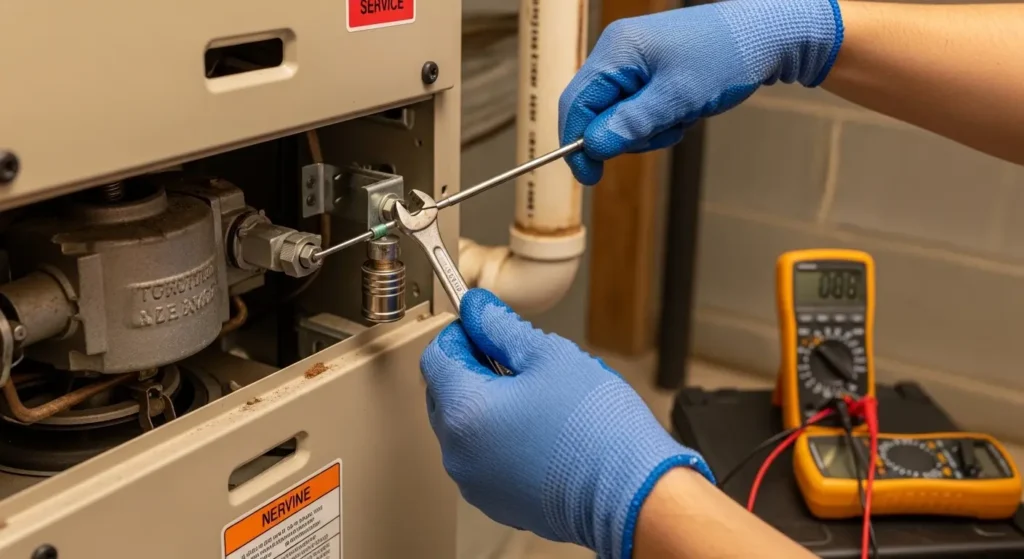

Is your furnace trapped in a cycle of starting up and then immediately quitting on you? It is one of the most frustrating things to deal with during a cold snap. You see the burners light, and you feel a tiny bit of hope, only for the fire to die five seconds later.
When this happens, your furnace enters a safety lockout to protect your home. Many homeowners search for how to reset furnace flame sensor, but there is a secret you should know first.
You don’t actually reset the rod itself. Instead, you have to reset the furnace control board while clearing the invisible barrier that caused the shutdown in the first place.
In this guide, we will show you the exact steps to clear that lockout safely and get your heat running again. We will cover the power cycling process and the simple cleaning trick that restores the signal so your furnace stops quitting.
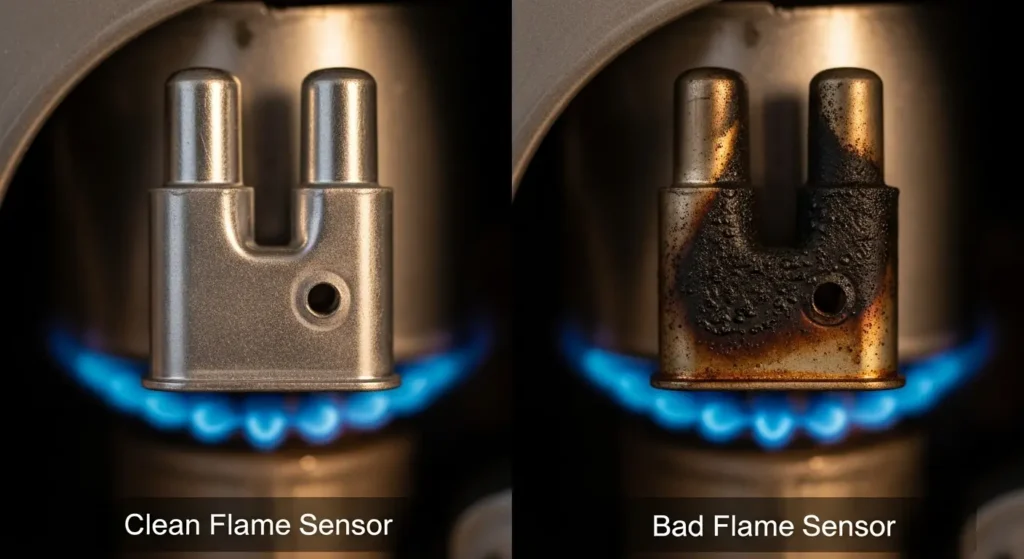
If you are not feeling like reading the entire guide, you’d better check what a bad flame sensor look like and go directly to the steps to fix it.
What Is a Furnace Flame Sensor?
Your furnace doesn’t just burn gas. It runs a safety check every time it starts. The flame sensor is the part that handles this. It is a simple metal rod in the burner box connected to one wire. It has no moving parts and only one job.
The sensor detects if a flame is actually there after the furnace lights. If it feels a flame, the gas stays on. If it doesn’t, the gas shuts off instantly. This is a safety feature that keeps unburned gas from filling your home.
Here is how it works:
- The thermostat calls for heat.
- The igniter glows and gas flows.
- The burners light up.
- The sensor checks for a flame within seconds.
- No signal means the gas shuts off and the furnace stops.
Most people only notice this part when the furnace starts quitting. When that happens, a dirty sensor is the first thing to check. Because it sits in the fire, it collects carbon and soot. This coating acts like a blanket and blocks the sensor. The furnace then thinks there is no flame and shuts down.
If your furnace runs for a few seconds and then cuts off, it isn’t broken. It is doing exactly what it was built to do. The sensor just needs a little care.
And that leads to the bigger question most homeowners ask next: why does this keep happening even after you clean it?
Why Your Furnace Flame Sensor Keeps Failing?
Health Canada estimates that carbon monoxide poisoning is responsible for approximately 300 deaths and 200 hospitalisations every year across the country. The leading cause is poorly maintained or malfunctioning fuel-burning appliances, and your furnace sits at the top of that list.
A published study in CMAJ Open found that CO-related deaths and hospital admissions peak between September and April, exactly the months your furnace runs hardest in Mississauga and across Ontario.
On top of that, Ontario’s Office of the Fire Marshal recorded an average of 536 heating equipment fires per year between 2015 and 2019, with 77% of those occurring in residential homes.
A flame sensor that keeps failing is not just inconvenient. It is a sign your furnace is working harder than it should. And a furnace under stress creates risk.
So why does it keep happening? One cleaning should solve it. But for many homeowners in the GTA, the problem comes back within weeks. That means something in the environment is causing it.
Here are the most common reasons:
Carbon buildup from normal combustion
Every time your furnace burns gas, it creates tiny carbon particles. These particles land on the sensor rod like a layer of dust. It only takes a thin coating to insulate the metal and block the electrical signal.
This happens during normal operation, but it shouldn’t happen overnight. If your sensor gets dirty every few weeks, your furnace is likely burning fuel poorly. This dirty fire creates extra soot that smothers the rod and forces the system to shut down for safety.
Contaminated indoor combustion air
This is the cause most homeowners never suspect. Furnaces installed near laundry rooms, cleaning supply storage, or painted surfaces pull those airborne chemicals directly into the burner.
When burned, they leave a coating on the sensor rod far faster than normal combustion residue. If you clean the sensor and it fails again within weeks, this is often why.
A dirty or blocked air filter
A dirty air filter starves your furnace of oxygen. This creates a weak, yellow flame that can’t reach the sensor rod properly. Without a strong signal, the furnace shuts down. To make things worse, each failed start leaves even more soot on the rod.
A cracked porcelain insulator
The ceramic base that holds the metal rod is not just structural. It insulates the sensor wire from the furnace chassis.
If that porcelain develops a hairline crack from age, heat stress, or being over-tightened during reinstallation, the electrical signal finds a shortcut to ground before it ever reaches the flame. No amount of cleaning fixes a cracked insulator. The sensor needs to be replaced.
Age and natural wear
A flame sensor usually lasts five to ten years. After that, the metal begins to wear out and fails to send a clear signal. Even a clean rod will eventually degrade and corrode. If your furnace is old and the sensor keeps failing, it simply needs a new one.
How old is your furnace? If it is over a decade old, a new sensor is a smart, cheap fix.
The pattern matters here. A sensor that fails once a season is normal wear. A sensor that fails every few weeks is telling you something about the environment your furnace is operating in, and cleaning it repeatedly without investigating that environment just delays the real fix.
Does Resetting a Furnace Fix the Flame Sensor?
When you look for how to reset furnace flame sensor, you really want to know how to stop the furnace from quitting.
Resetting the system will often get the heat back on, but only for a few minutes. It is a temporary bypass, not a repair. If the sensor is dirty, the furnace will simply see the problem again during the next cycle and shut down.
Your furnace is designed to be stubborn for your safety. When it can’t detect a flame, it follows a specific lockout protocol:
Soft Lockout: If the sensor misses the flame signal a few times, the furnace takes a time out. It will wait for about an hour before trying again. It hopes the issue was just a fluke, like a temporary draft.
Hard Lockout: If the failures keep happening, the furnace enters a hard lockout. At this stage, it will not try to start again on its own. It requires a human to manually cycle the power at the breaker or the furnace switch to “clear” the error.
The Diagnostic Light: Most modern units have a small LED on the control board. If you look through the sight glass, it will blink a code. Usually, three flashes mean “Flame Sense Failure.” Check the chart on the back of your furnace door to confirm this.
However, the biggest mistake you can make is resetting your furnace over and over without cleaning the rod. Each time you reset, the gas valve opens for a few seconds before the sensor kills the power. If you do this ten times in a row, you are essentially priming your furnace with unburned gas.
This is exactly what the flame sensor is meant to prevent. The correct professional order is first to reset once to confirm the symptoms, then immediately clean or replace the sensor. This protects your ignition system and ensures your home stays warm safely.
For this reason, we are now going to show you the steps of how to reset furnace flame sensor step by step manually.
Looking for more heating guides? Read how to understand furnace flame sensor problems and resolve issues before they leave you in the cold.
How to Reset a Furnace Flame Sensor: The Professional Guide
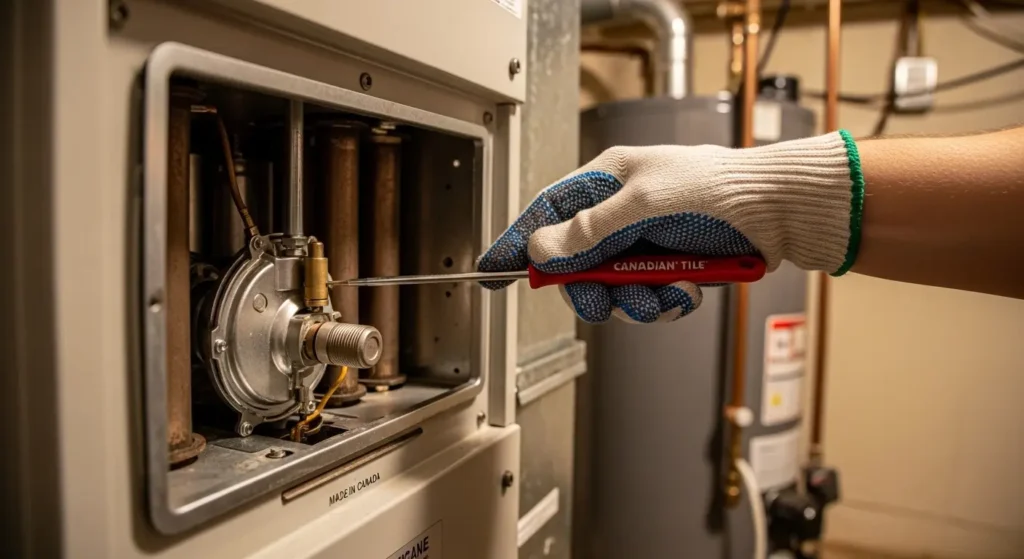
Resetting your furnace isn’t just about flipping a switch. To do it right, you have to clear the physical barrier on the sensor first. If you don’t clean the rod, the reset will only last for a single, frustrating cycle.
This process is the most common fix for a Canadian home in the winter, and you can usually handle it in under 20 minutes with a few basic tools.
What You’ll Need
You don’t need a heavy toolbox for this. A 1/4-inch nut driver or a Phillips screwdriver is usually all it takes to get the part out. For the cleaning itself, grab some fine steel wool (Grade 0000) or a clean emery cloth.
Pro Tip: Never use sandpaper. The sand on the paper is made of silica, which melts into glass when the furnace gets hot. This creates a permanent coating that ruins the sensor. Stick to steel wool or a dry, lint-free cloth.
1. Power Down and Cool Off
Before you touch a single screw, you must protect the system. Turn your thermostat to the “Off” position and cut the power at the furnace’s main breaker. For extra safety, shut off the gas valve leading into the unit.
Furnaces stay hot for a long time, so give the burner box at least 15 minutes to cool down before you reach inside.
2. Find the Rod
Remove the upper access panel of your furnace. Depending on your brand, this might involve sliding the door up or removing a couple of screws. Once the door is off, look for a small, thin metal rod with a white porcelain base. It usually sits at the far end of the burner assembly, opposite the igniter.
Lennox/Carrier Units: Usually found on the far right.
Goodman Units: Often mounted on the left side of the burner rack.
If you see a part that glows bright orange when the furnace starts, that is the igniter. You’d better leave that alone. You are looking for the plain metal rod with a single wire attached to it.
3. The “Gentle Scrub” Method
Wiggle the wire connector to pull it off, then remove the single mounting screw. Carefully slide the sensor out. You’ll likely see a dull, black, or chalky coating on the metal. Hold the part by the white porcelain base and lightly rub the metal rod with your steel wool.
You aren’t trying to sand the metal down. You just want to see that original silver shine again. Once it’s bright, wipe it with a clean cloth to make sure no steel wool bits are left behind.
4. Clearing the Lockout
Put the sensor back in, tighten the screw, and plug the wire back in firmly. After you replace the furnace door, you can restore the power. To reset the lockout, set your thermostat a few degrees higher than the current room temperature. This forces a fresh start and clears any old error codes from the furnace’s memory.
5. Verify The Fix
Stay by the unit for the first few minutes. You want to see the burners light up and stay lit. If the flame doesn’t cut out after ten seconds, you’ve successfully reset the system. If it still dies almost immediately, you might be dealing with a cracked porcelain base or a deeper electrical issue.
So, these five steps for how to reset furnace flame sensor are usually all it takes to get your heat back. We know it can be a bit nerve-wracking to open up your furnace for the first time.
But once you see that flame stay lit, you’ll realise just how manageable this DIY fix really is. Trust us, taking twenty minutes to clean a simple metal rod is much better than shivering through a cold night while waiting for a technician.
However, the truth is that cleaning doesn’t always solve the problem forever. Sometimes, the metal is too far gone, or the ceramic base has developed a tiny, invisible crack that no amount of scrubbing can fix.
That means you need to know when to stop cleaning and start shopping for a new part. To save you time and future headaches, we need to look at exactly when to replace a furnace flame sensor instead of just resetting it.
When to Replace a Furnace Flame Sensor?
Professional flame sensor replacement in Mississauga and the GTA typically runs between $239 and $300. This includes the service call, diagnosis, part, and labour.
If your furnace is under 12 years old and this is an isolated issue, repair makes clear sense. If it’s 15 years or older and you’re seeing repeated faults across multiple components, that’s a broader conversation worth having with your technician.
Eventually, this means you first need to know when you should replace a furnace flame sensor.
So, you should replace the sensor immediately if you notice any of these specific problems:
Fractures in the Ceramic: Take a close look at the white porcelain base. If you see any chips, cracks, or tiny spider-web lines, the sensor is done. These cracks act like an electrical leak. Instead of the signal going to the control board, it escapes through the cracks into the metal frame of the furnace.
Deep Metal Pitting: If the metal rod looks like it has tiny holes or a rough, eaten-away texture, it is past its prime. Even if you scrub it until it’s shiny, the degraded metal won’t conduct a steady signal.
Failed Multimeter Tests: If you test the sensor while the furnace is running and the reading stays below 0.5 microamps after a cleaning, the part is internally failed. A healthy furnace needs a much stronger signal to stay running safely.
The Monthly Cleaning Cycle: For those who have to clean their sensor every few weeks just to stay warm, the metal is likely worn too thin. While this can be caused by dusty air, a fresh sensor is often the only way to get through a Canadian winter without constant worry.
Melted or Corroded Tabs: Check the metal tab where the wire plugs in. If it is rusted green or the plastic around it has melted, the connection is compromised. You can’t fix a burnt connection with steel wool.
However, the fact is that cleaning solves the problem most of the time. But there are situations where a replacement is the only real answer.
Replacement sensors are inexpensive. The part itself runs between $8 and $25, depending on the brand. Robertshaw and White-Rodgers are reliable aftermarket options, or you can match the OEM part number from your furnace’s model sticker.
Make sure any universal sensor you buy has a compatible mounting bracket so the rod sits correctly in the flame path.
Now, at the end, what matters the most is finding out who provides professional furnace repair service near the GTA.
Furnace Flame Sensor Repair and Replacement
Knowing when to stop is just as important as knowing how to start.
If you have cleaned the rod and checked the signal, but the furnace still quits, the problem is deeper. That is where we come in.
HVAC Group is a TSSA-licensed contractor serving Mississauga, Brampton, Oakville, and the GTA. We work on all major brands like Carrier, Lennox, Goodman, and Trane. We carry spare parts on our trucks so we can usually fix your heat in one visit.
How We Can Help You:
Here is what we can help you with:
Furnace Repair: Same-day diagnostic and repair service for short-cycling, hard lockout, ignition failures, flame sensor faults, and control board issues. We find the actual cause, not just the obvious one.
Furnace Maintenance: Annual tune-up that includes flame sensor inspection and cleaning, heat exchanger check, combustion analysis, filter replacement, and a full safety review before heating season hits.
Furnace Installation and Replacement: If your furnace is 15 years or older and showing repeated component failures, we will give you an honest assessment of whether repair still makes financial sense or whether a high-efficiency replacement is the smarter investment.
When Mississauga temperatures drop below -15°C, a broken furnace can’t wait. We offer same-day repairs seven days a week, including evenings and weekends.
For everything else, like a furnace that keeps shutting off or a sensor that won’t stay clean, contact HVAC Group. We will get your heat back on today.